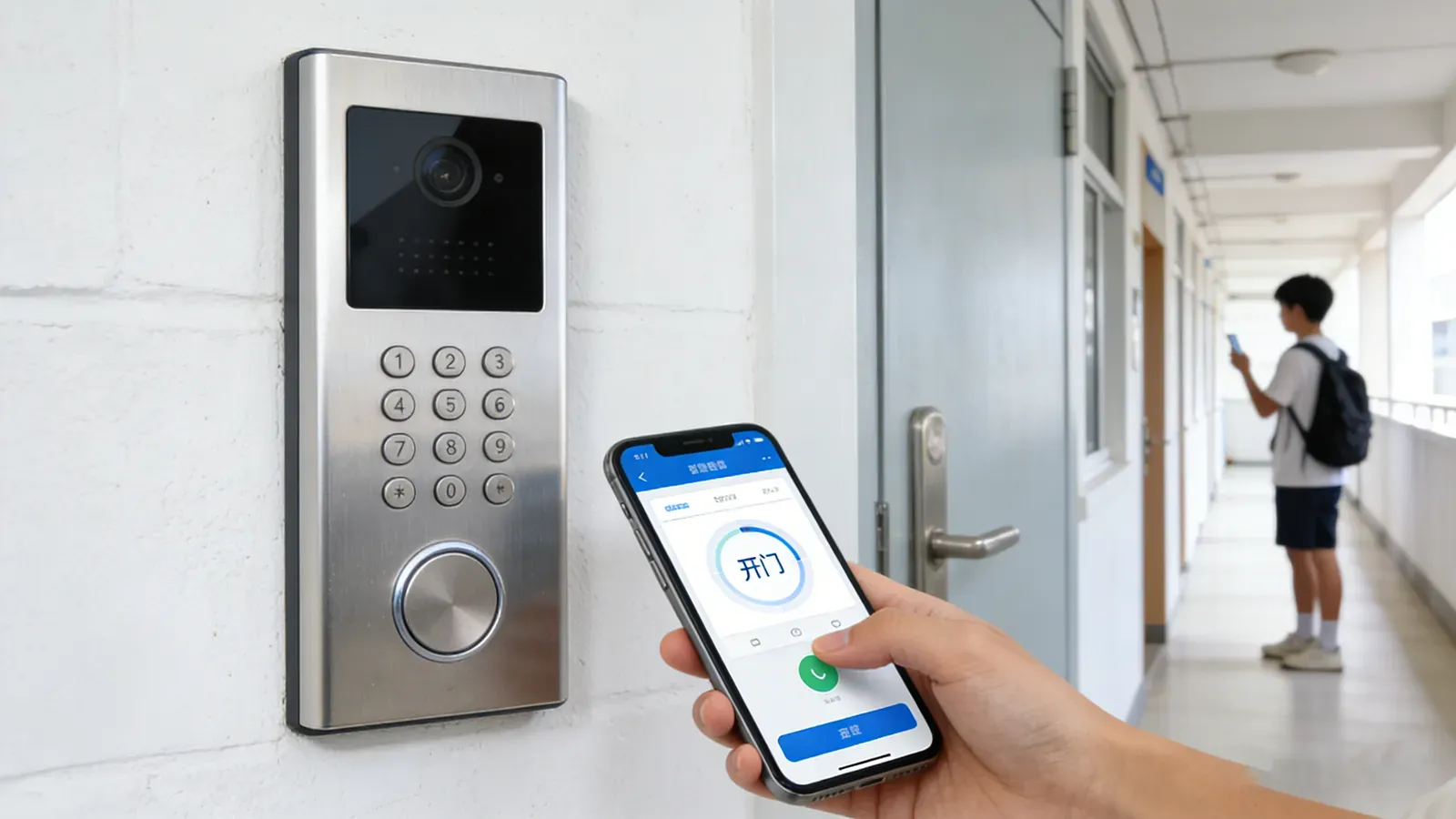
University dormitories are more than just places to sleep; they are dynamic ecosystems where students learn, socialize, and grow. However, the very vibrancy that makes campus life exciting can also create a significant challenge: noise. From late-night study sessions to weekend social gatherings, managing the acoustic environment is essential for ensuring student well-being, safety, and academic success. Today, a new generation of integrated technology—combining smart noise monitoring, advanced intercoms, and automated alarm systems—is offering a powerful solution to this age-old problem.
The Rising Tide of Noise: Why Acoustic Management is Crucial in University Housing
For decades, noise in dormitories was treated as an unavoidable nuisance, managed through resident advisor (RA) interventions and student complaints. However, a growing body of research and a shift in student expectations have elevated acoustic management from a matter of convenience to a critical component of a healthy and sustainable living environment.
The Impact of Noise on Student Well-being and Academic Performance
Persistent noise is not just an annoyance; it has measurable negative effects. Studies have consistently shown that excessive noise in student dormitories can profoundly impact sleep quality, mental health, and academic performance. A 2025 study published in the journal *Sustainability* found that noise levels in many university dormitories significantly exceeded thresholds recommended by the World Health Organization (WHO), leading to potential health risks. The study highlighted that traffic, indoor student activities, and technological sounds were primary sources of disturbance, while natural sounds had a positive effect on students' sense of comfort and satisfaction.
The consequences are clear: poor sleep leads to reduced cognitive function, stress from constant disruption can exacerbate anxiety, and an inability to find quiet study space can directly harm grades. By actively managing the acoustic environment, universities can create conditions that are more conducive to both learning and personal well-being.
Beyond Annoyance: The Regulatory and Reputational Stakes
The push for quieter dormitories is also driven by regulatory and institutional pressures. In the United States, organizations like the Occupational Safety and Health Administration (OSHA) set standards for noise exposure in workplaces, and while these don't directly apply to dorm rooms, they reflect a broader societal understanding of noise as a health hazard. More directly, many universities are establishing their own internal regulations to ensure a quiet and respectful living environment, often specifying "quiet hours" and penalties for violations. For instance, institutions like China Pharmaceutical University explicitly prohibit noise that disturbs others between 10 p.m. and 6 a.m., classifying it as a serious violation.
Failure to manage noise can lead to increased student complaints, higher RA burnout, and a negative reputation for campus housing. In a competitive higher education market, the quality of student life is a key differentiator, and a commitment to providing a safe, comfortable, and quiet living space is a tangible asset.
The First Line of Defense: Architectural and Environmental Acoustics
Before any technology is installed, the physical structure of a building is the primary determinant of its acoustic performance. Proactive architectural design and environmental planning can prevent many noise issues from ever arising, creating a fundamentally quieter baseline.
Understanding Acoustic Ratings: STC and IIC
Building professionals use two key metrics to measure sound insulation:
Sound Transmission Class (STC): This rating measures how well a partition (like a wall or ceiling) blocks airborne noise, such as voices, music, or traffic. A higher STC value indicates better sound insulation. For example, a standard interior wall might have an STC of 35, where loud speech is audible, while a high-performance wall with an STC of 60 would make the same speech nearly inaudible. According to building codes like the International Building Code (IBC), multi-family residences often require a minimum STC of 50.
Impact Insulation Class (IIC): This rating measures a floor/ceiling assembly's ability to block impact noise, such as footsteps, dropped objects, or moving furniture. A higher IIC value means less impact sound is transmitted to the space below. A bare concrete floor might have a low IIC, while a floor with a resilient underlayment and carpeting could achieve an IIC of 60 or higher, significantly reducing disturbances for downstairs neighbors.
For dormitory construction and renovation, specifying materials and assemblies with high STC and IIC ratings for walls and floors between rooms is a critical investment in long-term acoustic comfort.
Practical Noise Mitigation Strategies
Beyond material specifications, several design strategies can enhance the acoustic environment. Research suggests that integrating natural elements can be highly effective. A 2025 study on university dormitories recommended several "ecological design" approaches:
- Vertical Greening: Plant-covered walls can absorb sound and attract pleasant natural sounds like birdsong.
- Water Features: Fountains or small ponds can mask disruptive traffic and human-made noise with a more soothing sound.
- Green Buffers: Preserving trees and shrubs near dormitory areas acts as a natural barrier to external noise.
From a structural standpoint, architects can employ techniques like using double-stud walls with insulation, staggering electrical outlets to prevent direct sound paths, and installing solid-core doors with full-perimeter seals. According to acoustic experts, sealing gaps around doors, windows, and wall penetrations is one of the most cost-effective ways to improve sound insulation.
Level Two: Real-Time Noise Monitoring Systems
While architectural design provides a passive defense against noise, active management requires real-time data. Modern noise monitoring systems, powered by the Internet of Things (IoT), offer a sophisticated, data-driven approach to maintaining a quiet environment without compromising privacy.
How Modern Noise Sensors Work
A common misconception is that noise monitors "listen" to or record conversations. In reality, privacy-safe systems are designed to do one thing: measure sound pressure levels in decibels (dB). They do not record audio. These sensors function like a digital thermometer for sound, providing objective, quantitative data on the loudness of an environment. Many advanced systems use edge processing, where the decibel level is calculated directly on the device itself, and only this numerical data is sent to the cloud. This design ensures that student privacy is protected while still providing actionable insights for facility managers.
Key Features of an Effective System
When selecting a noise monitoring system for a dormitory, key features to look for include:
- Adjustable Thresholds: The ability to set different decibel limits for different times of day (e.g., stricter limits during quiet hours) or different zones (e.g., study lounges vs. common areas).
- Real-Time Alerts: Automatic notifications (via SMS, email, or app) sent to RAs or security staff when a noise threshold is breached for a sustained period. This enables proactive intervention before a situation escalates.
- Cloud-Based Dashboard: A centralized platform for viewing real-time data, analyzing historical trends, and managing devices remotely. This helps identify recurring problem areas or times.
- Wireless Connectivity: Wi-Fi or LoRaWAN-enabled sensors allow for flexible installation without the need for extensive wiring, making them ideal for retrofitting existing buildings.
- Integration Capabilities (APIs): The ability to connect with other building systems, such as intercoms, security platforms, or a central Building Management System (BMS), is crucial for creating a truly smart and responsive environment.
The Global Noise Monitoring Market at a Glance
The adoption of these technologies is part of a broader trend. The global noise monitoring system market is experiencing steady growth, driven by stricter environmental regulations, increased urbanization, and technological advancements. Valued at approximately $677.8 million in 2025, the market is projected to expand at a compound annual growth rate (CAGR) of 2.3% through 2033. While industrial and transportation applications have historically dominated the market, there is a growing demand in commercial and residential sectors, including educational institutions


Data Source: Data Insights Market (2026)
Analysis from Future Market Insights further highlights this growth, projecting a global CAGR of 4.8% for the broader noise control system market between 2025 and 2035. Regional growth is particularly strong in North America and Asia Pacific, fueled by stringent regulations and rapid infrastructure development. This market momentum is accelerating innovation, making these systems more affordable, accurate, and accessible for applications like dormitory management.


Data Source: Future Market Insights (2025)
The Evolution of Dormitory Access: From Buzzers to Smart Intercoms
Parallel to the advancements in noise monitoring, dormitory entry systems have undergone a dramatic transformation. The simple audio buzzers of the past are being replaced by sophisticated, IP-based smart intercoms that serve as integrated hubs for communication, security, and access control.
Core Components of Modern Intercoms
Unlike their analog predecessors, modern smart intercoms are essentially networked devices. They have become command centers for security and convenience, fundamentally changing how residents, guests, and managers interact with a property. Key features now considered standard include:
- High-Definition Video: Crystal-clear, wide-angle video feeds allow residents to visually verify visitors before granting access, a significant security upgrade over audio-only systems.
- Mobile App Integration: The most transformative feature, allowing students to answer calls, see visitors, and unlock doors from their smartphones, whether they are in their room or across campus.
- Cloud-Based Management: Property managers can remotely update resident directories, manage access credentials (like key fobs or mobile keys), and review time-stamped entry logs from any web browser.
Keyless Entry Options: Many systems support multiple entry methods, including mobile apps, PIN codes, key fobs, and even facial recognition, offering flexibility and enhanced security.
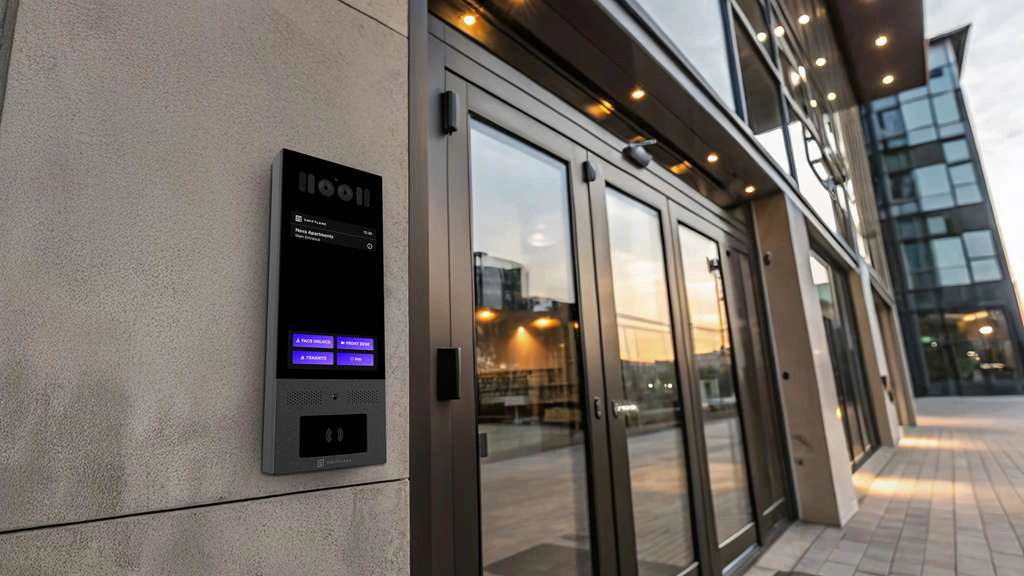
A modern smart intercom, like this Swiftlane unit, combines video, mobile access, and cloud management for enhanced building security
Enhancing Security and Convenience
For dormitory management, the benefits of smart intercoms are twofold. Security is bolstered through features like video verification, which deters unauthorized access and "tailgating," and detailed access logs, which provide a clear audit trail in case of an incident. Systems from providers like Swiftlane offer high durability ratings (e.g., IP65 for weatherproofing and IK10 for vandal resistance), ensuring reliability in high-traffic campus environments.
Convenience is dramatically improved for both students and staff. Students can grant access to guests or delivery services remotely, eliminating the need to be physically present. For managers, the ability to issue or revoke access credentials instantly from a cloud dashboard streamlines resident turnover and eliminates the security risks associated with lost physical keys.
The Core Integration: Creating a Unified Dormitory Safety and Management System
The true power of these technologies is realized when they are integrated into a single, cohesive system. By connecting noise monitors, smart intercoms, and emergency alarms, universities can move from a reactive to a proactive and automated approach to dormitory management, enhancing both safety and operational efficiency.
The "SMART" Approach to System Design
When planning an integrated system, adopting the SMART principles from management theory provides a robust framework for success:
- Specific: Clearly define the goal. E.g., "Reduce noise complaints during quiet hours by 50% in North Hall within one academic year."
- Measurable: Use the data from the noise monitoring system to track decibel levels and the number of alerts, and cross-reference with RA incident reports.
- Achievable: Start with a pilot program in one or two dorms to test the technology and refine procedures before a campus-wide rollout.
- Relevant: Ensure the system directly addresses key institutional goals, such as improving student retention, enhancing campus safety, and optimizing staff resources.
- Time-bound: Set clear timelines for implementation, training, and evaluation of the system's effectiveness.
Integrating Noise Monitoring with Intercoms and Alarms
An integrated system enables automated workflows that would be impossible with standalone devices. Consider these scenarios:
- Automated Noise Complaint Handling: A noise sensor in a common area detects sustained levels above the "quiet hours" threshold. The system automatically sends a notification to the on-duty RA's smartphone via the intercom app. The alert includes the location and a timestamp, providing objective data for the RA to address the issue. This is more efficient and less confrontational than relying on student complaints.
- Enhanced Emergency Response: When a fire alarm is triggered, the system can automatically leverage the intercom's capabilities. Instead of just a generic siren, the system could broadcast a pre-recorded, location-specific voice message (e.g., "Fire alarm activated on the third floor. Please use the west stairwell to evacuate."). This aligns with NFPA 72 guidelines, which emphasize not just audibility but also intelligibility of emergency messages.
- Dynamic Audibility Adjustment: In the event of an alarm, the integrated system can automatically reduce or mute ambient noise sources it controls, such as music systems in common areas. This ensures the alarm signal is clearly heard, meeting the NFPA 72 requirement for alarms to be at least 15 dB above the average ambient sound level.
The Role of the Building Management System (BMS) as a Central Hub
For maximum efficiency, these subsystems should be integrated with a central Building Management System (BMS). A BMS is a computer-based control system that monitors and manages a building's mechanical and electrical equipment, such as ventilation, lighting, power, and security systems. By connecting the intercom, noise monitoring, and fire alarm systems to the BMS, property managers gain a single, centralized dashboard for overseeing the entire building's operations. This unified view allows for more sophisticated automation, such as adjusting HVAC systems in response to occupancy data derived from the access control system or correlating energy usage with room activity.
Technical Deep Dive: Hardware, Software, and Protocols
Building an integrated dormitory system requires a carefully selected stack of hardware, software, and communication technologies. The goal is to create a system that is reliable, scalable, and secure.
Hardware Components
The foundation of a smart dormitory system is built on a combination of off-the-shelf and specialized hardware:
- Microcontrollers: Low-cost, powerful boards like the ESP32 or STM32 often serve as the "brain" of custom IoT devices. They are capable of reading sensor data, processing it, and communicating over a network.
- Sensors: The primary sensor for noise monitoring is a MEMS (Micro-Electro-Mechanical Systems) acoustic sensor, which measures decibel levels. These sensors are compact, energy-efficient, and can be integrated with other environmental sensors for temperature, humidity, and air quality.
- Communication Modules: The ESP8266 is a popular Wi-Fi module that provides easy and affordable internet connectivity for IoT devices. For applications requiring longer range and lower power consumption, such as sensors in remote parts of a campus, LoRa (Long Range) technology can transmit data over several hundred meters.
- Intercom and Alarm Hardware: This includes the intercom door station, electronic door locks, and specialized fire alarm components like speakers, strobes, and the Fire Alarm Control Unit (FACU), which must comply with standards like NFPA 72.
Communication and Network Architecture
A robust network is the backbone of any smart system. The architecture typically involves a multi-layered approach:
- Local Area Network (LAN): Devices within a building connect via Wi-Fi or Ethernet. It's a best practice to segment security devices like intercoms and sensors onto their own Virtual LAN (VLAN) to isolate them from general student network traffic, enhancing security.
- Cloud Platform: IoT devices and intercom systems send data to a central cloud server. This server hosts the management dashboard, stores historical data, and processes the logic for automated alerts and integrations.
- APIs (Application Programming Interfaces): APIs are the "glue" that allows different systems to talk to each other. A noise monitoring system might use an API to send an alert to the intercom system's app, or the intercom system could use an API to log an entry event in the central security database.
Data Management and Privacy
With the collection of any data comes the responsibility of managing it securely and ethically. As mentioned, noise monitors should only measure decibel levels, not record audio. All data transmitted from devices to the cloud must be encrypted (e.g., using TLS) to prevent interception. Access to the management dashboard should be protected with strong passwords and multi-factor authentication. Clear policies on data retention and usage are essential to build and maintain trust with students.
Implementation and Best Practices
Deploying a new technology system across a university campus requires careful planning, clear communication, and a focus on building a positive culture around its use.
Phased Rollout and Pilot Programs
A "big bang" campus-wide launch is risky. A more prudent approach is to start with a pilot program in one or two dormitories. This allows the university to:
- Test the technology in a real-world environment.
- Identify and resolve any technical glitches or network issues.
- Gather feedback from RAs and students to refine procedures.
- Develop a solid training program for staff.
- Build a case for a wider rollout based on measurable success metrics.
The lessons learned during the pilot phase are invaluable for ensuring a smooth and successful implementation across the rest of the campus.
Fostering a Culture of Respect: Student Education and Communication
Technology alone cannot solve noise problems. It must be paired with education and a community-wide commitment to respectful living. Experts in educational facility monitoring emphasize the importance of starting with the "why." Students are more likely to adhere to noise policies if they understand their purpose: to create an environment where everyone can study, sleep, and thrive.
Effective communication strategies include:
- Relatable Explanations: Use concrete examples and metaphors to explain decibel levels (e.g., a whisper is ~30 dB, a normal conversation is ~60 dB, loud music can be 85+ dB).
- Visual Aids: Post clear signage in common areas and residence halls outlining quiet hours and noise expectations.
- Peer Leadership: Train RAs and student leaders to mediate noise disputes respectfully and reinforce community standards.
- Transparency: Be open about how the noise monitoring system works, emphasizing that it is a privacy-safe tool designed to ensure fairness and objectivity, not to spy on residents.
Legal and Ethical Considerations
Implementing any monitoring technology in a residential setting requires careful attention to legal and ethical boundaries. A clear and comprehensive policy should be developed in consultation with legal counsel and student affairs. This policy should be included in the housing agreement and should explicitly state:
- The purpose of the monitoring system.
- The type of data being collected (i.e., decibel levels only).
- Who has access to the data.
- How the data will be used (e.g., to verify noise complaints).
- The data retention period.
By being transparent and establishing clear guidelines, universities can implement these beneficial technologies while upholding their commitment to student privacy and rights.
Conclusion: Building the Dormitory of the Future
The modern dormitory is evolving into a smart, connected space designed to actively support the student experience. By integrating noise monitoring, smart intercoms, and automated alarm systems, universities can create living environments that are safer, quieter, and more efficient to manage. This technological shift moves dormitory management from a reactive, complaint-driven model to a proactive, data-informed one.
The benefits are comprehensive: students enjoy a better quality of life with fewer disturbances, leading to improved academic outcomes and well-being. Resident advisors are empowered with objective tools that reduce conflict and burnout. And university administrators gain valuable operational insights while enhancing the safety and reputation of their campus housing.
As technology continues to advance, with AI-driven predictive analytics and even more seamless integrations on the horizon, the potential to create truly responsive and supportive student ecosystems will only grow. The quiet revolution is here, and it is building the foundation for the dormitory of the future.

 English
 Deutsch
 한국어
한국어 Русский
 Français
 日本語
日本語 لالعربية
 हिन्दी
 Español
 Português
 繁体中文
繁体中文 简体中文
简体中文